Posts

Showing posts with the label #women novelists

The Earliest Known Accolade of Jane Austen.

Image
  In May 1820, only three years after Jane Austen died, an article appeared in The New Monthly Magazine and Universal Register , a periodical edited by Thomas Campbell, ‎Samuel Carter Hall, and ‎Edward Bulwer Lytton Lytton  ‎(author of The Last Days of Pompeii ). It was an extended appreciation and evaluation of the women writers of the time, and was entitled "On the Female Literature of the present age; No. 2. The Author of Glenarvon; the Miss Porters; Mrs. Inchbald; Madame Arblay; Miss Burney; Lady Morgan; Miss Austen; Mrs. Jackson; Miss Taylor; ..."     The critic gives high praise to many of Jane Austen's contemporaries. When he (assuming it is one if the three editors who is writing) comes to Jane Austen, he laments her early death, and praises her in terms that may surprise modern readers.  " ... We turn from the dazzling brilliancy of Lady Morgan's works to  repose on the soft green of Miss Austen's sweet and unambitious creations . Her " Sense ...
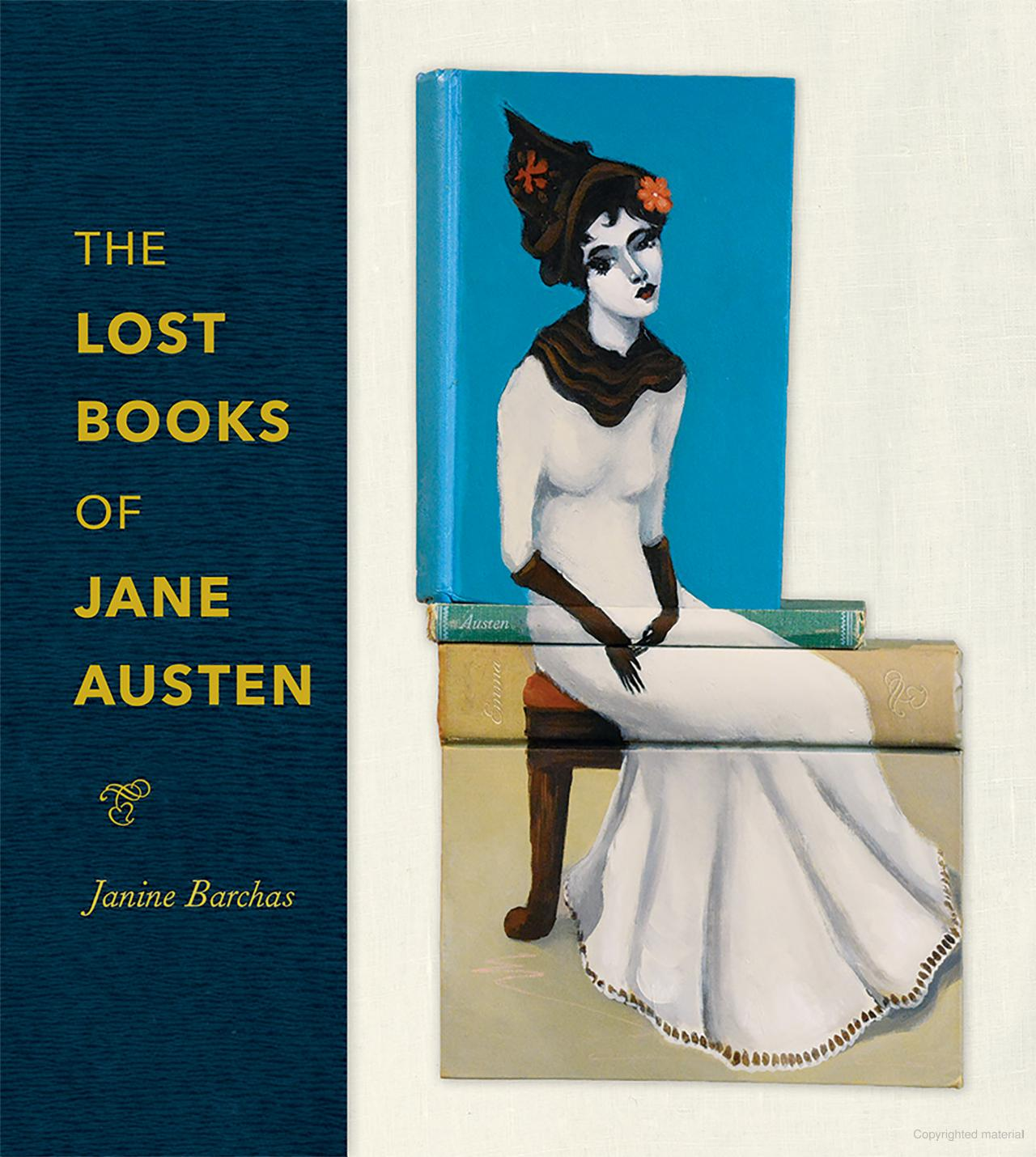
The Lost Books of Jane Austen

Image
The Lost Books of Jane Austen is the title of a book by an American, Janine Barchas. How exciting it sounds! What are these lost books of Jane Austen, and is she about to unveil some undiscovered, unpublished manuscripts to the world? A couple of years ago a book that is possibly an unknown early work by Austen was reprinted: Two Girls of Eighteen, edited by P.J. Allen.    Sadly, there are no such revelations in Barchas's book. The title merely refers to the many different editions of Austen's novels which have appeared over the two centuries since she wrote them, and which Barchas apparently collects.    This is an amusing hobby if you have got the space, and Barchas reproduces countless cover designs and title pages in different styles, typefaces and formats, with or without illustrations, according to shifting tastes, and the sort of readership the edition was aimed at. Some are meant to impress, others to lure the reader with promises of excitement or gooey rom...

5-star Reviews for Sophie de Tott, Artist in a Time of Revolution

Image
Five-star ratings and reviews are coming in for " Sophie de Tott, Artist in a Time of Revolution, " on book websites such as Goodreads and Amazon, and on social media.  Amazon Customer 5.0 out of 5 stars   Artist, novelist, musician, refugee Reviewed in the United States on May 1, 2020 I found this a fascinating read. Sometime in the year 1800, 42-year-old Sophie de Tott from Paris, artist, novelist, refugee and strong supporter of the Bourbon monarchy, flees from Hamburg to Maddox Street, London, to escape Napoleon's agents and the likely guillotine. In London she continues to paint portraits for a living, as she has done with some success in the Hanseatic city. The French Revolution had upended so many lives - occasionally for the better, as would be the case with Fanny Burney and her French refugee husband. Julia Gasper's absorbing account of the daring, peripatetic existence of Sophie de Tott, however, makes it clear that in this...

Sophie de Tott and Elizabeth Craven

Image
Sophie de Tott by Vigée-Lebrun Of all the emigrés who were welcomed to Brandenburgh House by Elizabeth Craven in the aftermath of the French Revolution, none was more remarkable than Sophie de Tott. She was an artist who exhibited her paintings at the British Royal Academy and when she came to stay at Brandenburgh House she painted portraits of Elizabeth's second husband the Margrave of Anspach and her son Keppel. Madame de Tott had once lived in Paris among the highest French aristocracy. As a girl she had been adopted by a rich Countess and lived in the heart of the capital, meeting all the leading intellectuals and enjoying the most cultivated salons. Laudatory poems had been written about her. She had known Louis XVI, Marie Antoinette, Lafayette, Madame de Stael and Elisabeth Vigée-Lebrun who painted this oval portrait of her in 1786. Since fleeing from Paris in the Revolution of 1789 she had lived in Switzerland and Germany, earning a living with her paintbrush. When...

Elizabeth Craven on Eighteenth Century Poetry website

Image
The Eighteenth Century Poetry website has now got an updated and far more comprehensive entry on Elizabeth Craven.  Elizabeth Craven painted by Romney. © National Portrait Gallery, London It lists some of her most outstanding short poems, lists full-length biographies of her and mentions entries in the DNB and reference works. This is very welcome! https://www.eighteenthcenturypoetry.org/authors/pers00215.shtml