Posts

Showing posts with the label #Jane Austen

Names in Jane Austen

Image
 The names in Jane Austen's novels may appear bland and commonplace, but are always carefully chosen and often contain coded meanings.    In Pride and Prejudice,  Austen gave the heroine a name, Bennet, that is a close twin of her own.  Austen or Austin is a contraction of "Augustine". Austin-friars in the City of London is a street where before the Reformation there was a monastery of the order of St Augustine, one of many in England. The name Bennet is a contraction of "Benedict" another saint who founded a monastic order. Austen surely chose the name because the heroine, Elizabeth Bennet, is a self-portrait. The Bennet family resemble the Austens in one crucial respect - they cannot pass on the family home to the next generation. Their predicament is due to an entail whereas that of the Austens arose out of the fact that her father was a clergyman whose rectory would pass to the next incumbent.     One of the privileges of the English aristocracy is...

"Miss Austen" by Gill Hornby

Image
Chawton cottage.    I'm sure many people are, like me, enjoying watching the TV dramatisation of Gill Hornby's novel "Miss Austen", which centres on Jane Austen's elder sister, Cassandra.    I have not, alas, read the book. I intend to do so but for now will be content to enjoy Keeley Hawes' performance as Cassandra in later life, and the very atmospheric recreation of the Regency world. The casting of Jane Austen herself is certainly rather surprising, not at all like the classical beauty we are used to seeing on the £10 banknote. Patsy Curran has an expressive and distinctly comical face, far darker than most portrayals of the authoress.    If you know anything about Jane Austen you will be familiar with the story of how her elder sister's fiancé died before they could be married, leaving her to remain "Miss Austen" for life. After Jane's death Cassandra destroyed an unknown number of her sister's letters, cutting out passages from the ...

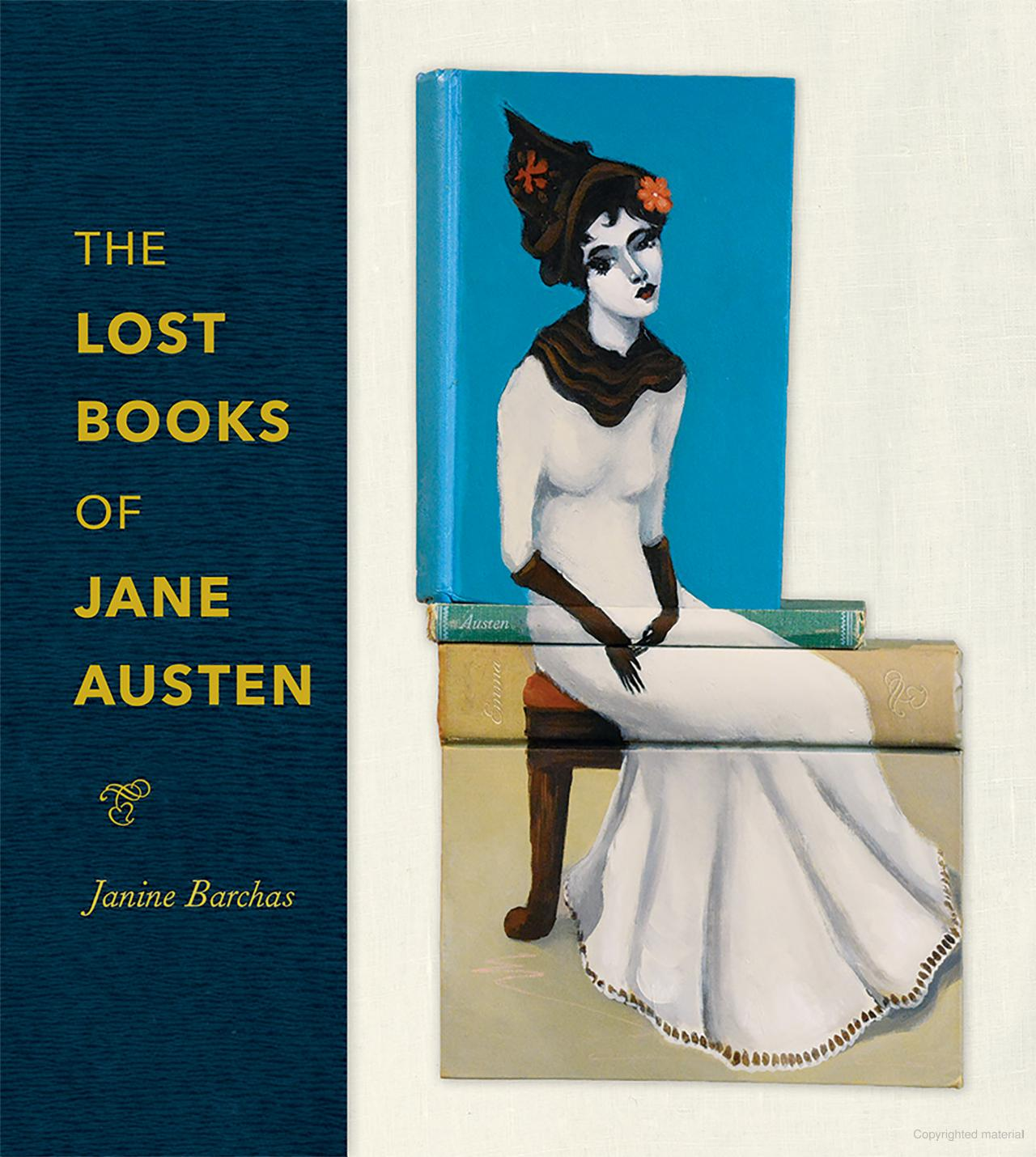
The Lost Books of Jane Austen

Image
The Lost Books of Jane Austen is the title of a book by an American, Janine Barchas. How exciting it sounds! What are these lost books of Jane Austen, and is she about to unveil some undiscovered, unpublished manuscripts to the world? A couple of years ago a book that is possibly an unknown early work by Austen was reprinted: Two Girls of Eighteen, edited by P.J. Allen.    Sadly, there are no such revelations in Barchas's book. The title merely refers to the many different editions of Austen's novels which have appeared over the two centuries since she wrote them, and which Barchas apparently collects.    This is an amusing hobby if you have got the space, and Barchas reproduces countless cover designs and title pages in different styles, typefaces and formats, with or without illustrations, according to shifting tastes, and the sort of readership the edition was aimed at. Some are meant to impress, others to lure the reader with promises of excitement or gooey rom...

Who Betrays Elizabeth Bennet? In defence of Charlotte Collins.

Image
     In his book  Who Betrays Elizabeth Bennet?: Further Puzzles in Classic Fiction , Professor John Sutherland raised the question of how the rumour of Elizabeth Bennet's imminent engagement to Mr Darcy could have reached the ears of Lady Catherine de Bourgh, prompting her to make her bossy and interfering call on Elizabeth at Longbourn in volume 3 of Jane Austen's Pride and Prejudice .      I love this sort of criticism, which used to be referred to as the "How many children had Lady Macbeth?" school. Now desperately unfashionable, it treats characters in novels as real people who exist beyond the parameters of the written narrative and can thus be followed and investigated outside the boundaries of the text. It makes an interesting game, and it is certainly far less absurd than many of the currently fashionable schools of criticism. Professor Sutherland is right, that if we cannot provide any reasonable explanation of how and why this rumour travell...

Jane Austen, the Cravens and the Leigh family

Image
DR671/56 Jane Austen is listed as receiving jewellery after the death of Mary Leigh in 1806 This document from the archives of Stoneleigh Abbey is a page from the Will of the Hon. Mary Leigh who died in 1806, listing the names of female relatives to whom she left small bequests of jewellry. On the left hand side are listed "Miss Austen" and "Miss Jane Austen" - that is, the novelist and her elder sister Cassandra. On the right hand page we find the names of three of the daughters of Elizabeth Craven, the writer who was at one time married to the 6th Lord Craven. The married daughters are "The Countess of Sefton" and "The honourable Mrs St. John" while the unmarried Georgiana is "The honourable Miss Craven". Both the Cravens and the Austen family were related to the Leigh family, and so they are mentioned side by side in this list of beneficiaries. This common link was one of several connections Jane Austen had with the family of Elizabe...

Paintings of Coombe Abbey by Maria Johnstone

Image
  Maria Johnstone was the niece of William, 6th Baron Craven, Elizabeth Craven's husband, so she was the writer's niece by marriage. Several watercolour paintings by her of Coombe Abbey and its surroundings are preserved in the Herbert Art Gallery and Museum, Coventry.  They give a vivid picture of the house as it was in 1797, before the ambitious alterations of later generations. Seen at this distance and from this angle, it merges into one harmonious whole, with the Georgian wings on the left and the Tudor  and Stuart buildings visible on the right, unified by being in stone of the same colour. A few sheep graze peacefully in the foreground.  Coombe Abbey was by this time owned by Elizabeth Craven's son, the next Lord Craven, who was too busy on active service during the war to spend much time there.  Maria Johnstone was aged twenty when she did these paintings. Her father, the Rev. Robert Augustus Johnstone, had married Anna Rebecca Craven in 1773, and M...

Chawton Cottage, the home of Jane Austen.

Image
When Elizabeth Craven travelled from London down to Southampton to visit the Isle of Wight, which she loved, she must have passed through Alton in Hampshire, and may even have driven right past the house, Chawton Cottage, where Jane Austen was living from 1809 until 1817. There was a family connection between them as Jane's sister Cassandra had been engaged to Elizabeth Craven's son's chaplain, who died tragically on a military expedition to the West Indies. And with the Austens was living Martha Lloyd, who was related to the Craven family. Her mother had been born a Craven. This red brick house on a corner in the village of Chawton was the property of Austen's wealthy brother Edward who also owned the local manor house. He provided a former bailiff's cottage on the estate for his widowed mother and two sisters, and it was here that Jane lived for the last eight years of her life, while she wrote most of her best novels. Nowadays the house is preserved as a tribute ...